good day practice no. 08
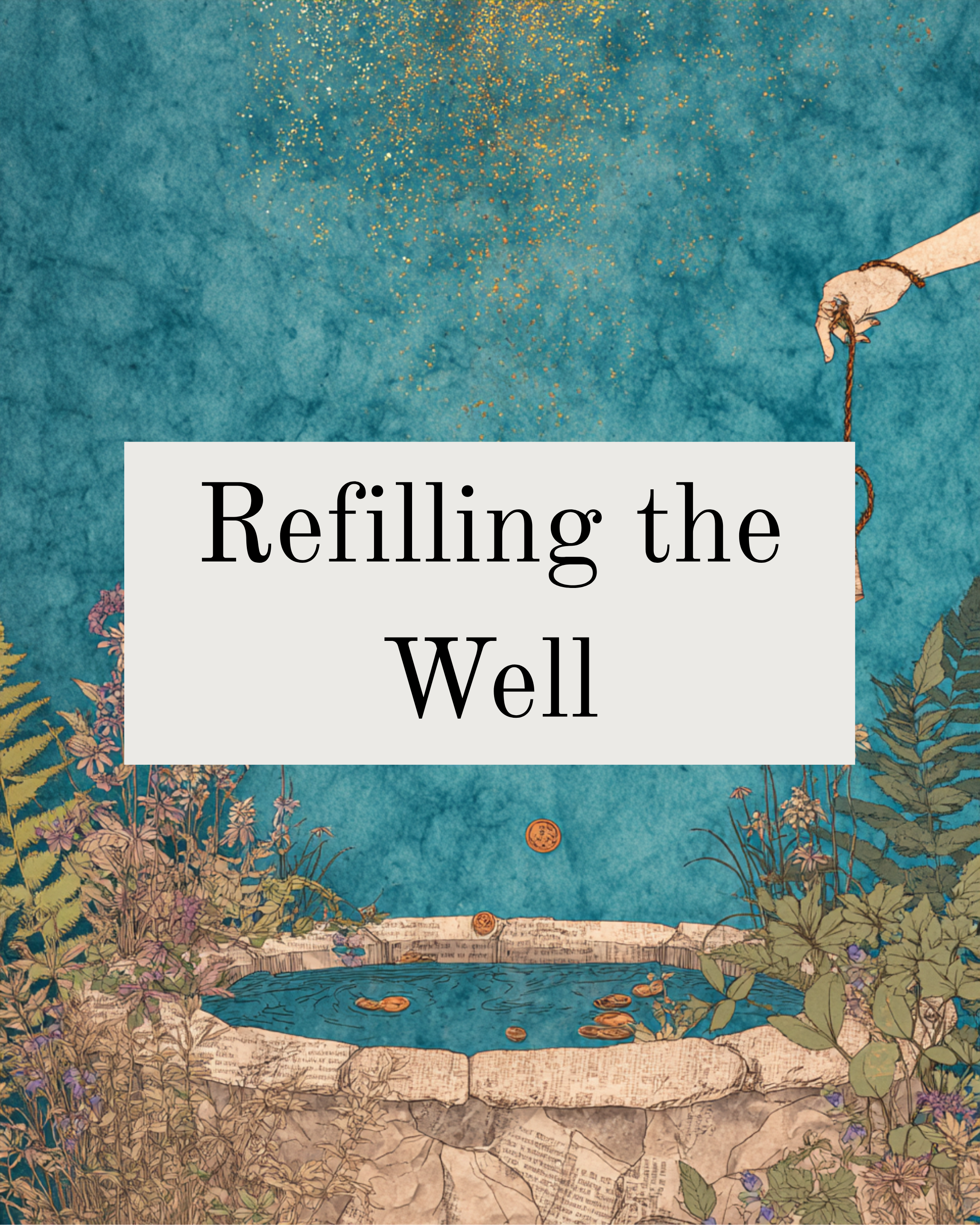
Refilling the well
Edition no. 08 · September 20, 2026
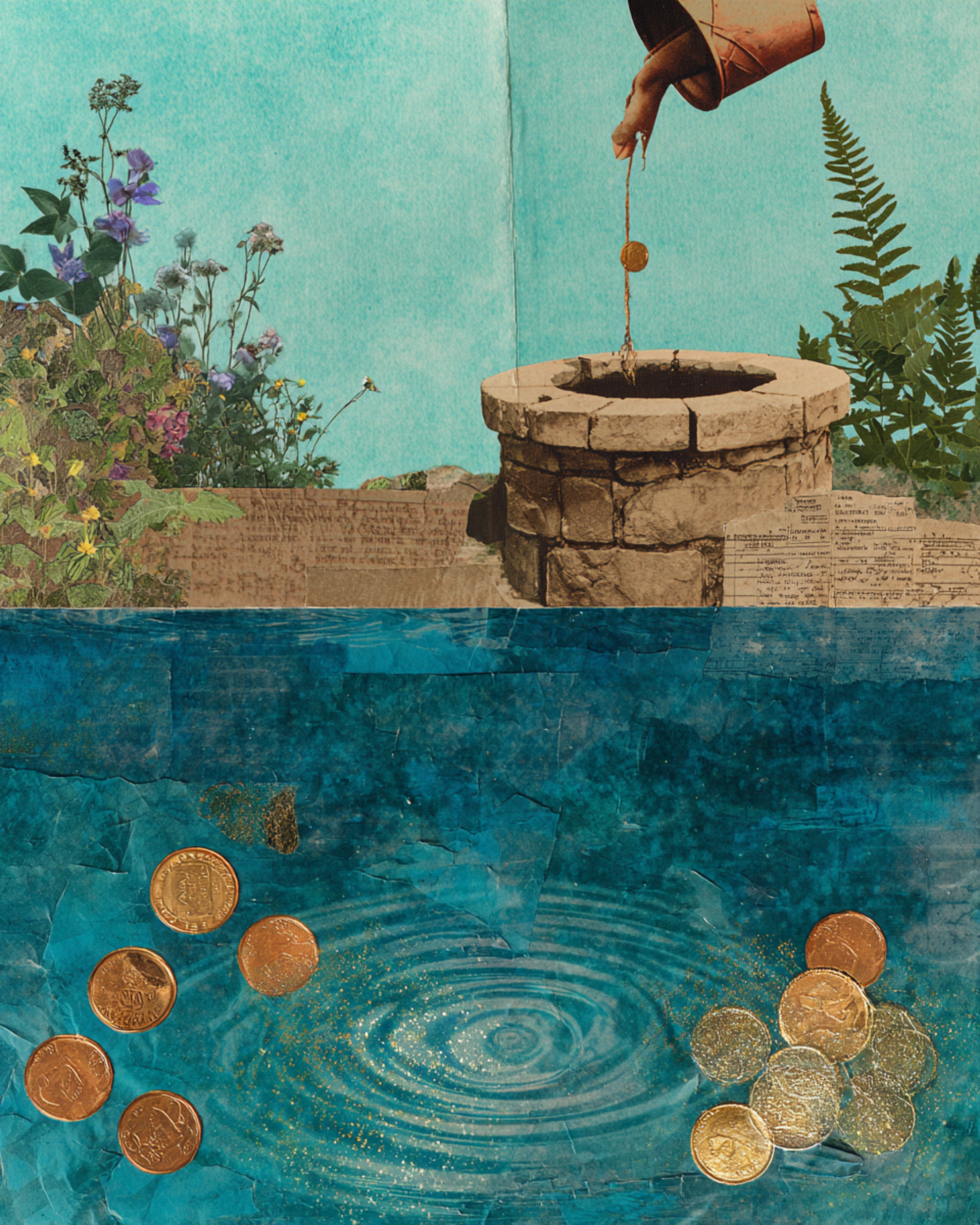
This week, we've been working with a theme called words become worlds.
A year ago this September I gave my notice. Then I finished my master's, went to Kripalu for teacher training, and came home and had to have my appendix out. (All that listening-to-your-body work turned out to be extremely practical. I caught it before it burst.)
What followed was months of not knowing. I wanted to teach and also had no idea whether I'd be any good at it. What I knew for sure was that I wanted to help people feel a little better and have more good days, and that I had no idea yet what shape that would take. I also knew I wasn't going back to a schedule that had me feeling the way I felt last September.
A year later I'm still working it out. And I've spent a lot of this year narrating my own progress unkindly. Not far enough along. Should be doing more. Should have figured it out by now.
Underneath that, though, there's been a quieter voice suggesting I try being kinder about it. Not more optimistic, exactly. Just less of a prosecutor.
That voice gets louder the more I practice it. It doesn't always win. I keep going back to it anyway.
There is a particular version of wellness advice that treats depletion like a subtraction problem.
Too tired? Do less.
Overwhelmed? Say no.
Protect your energy.
None of this is bad advice. I have needed all of it at various points. But I think it can flatten the difference between conserving our reserves and replenishing them.
Those are not always the same thing.
You can stop drawing from a well for a while, but eventually something still has to feed the water underneath it.
That was the image I kept coming back to this week.
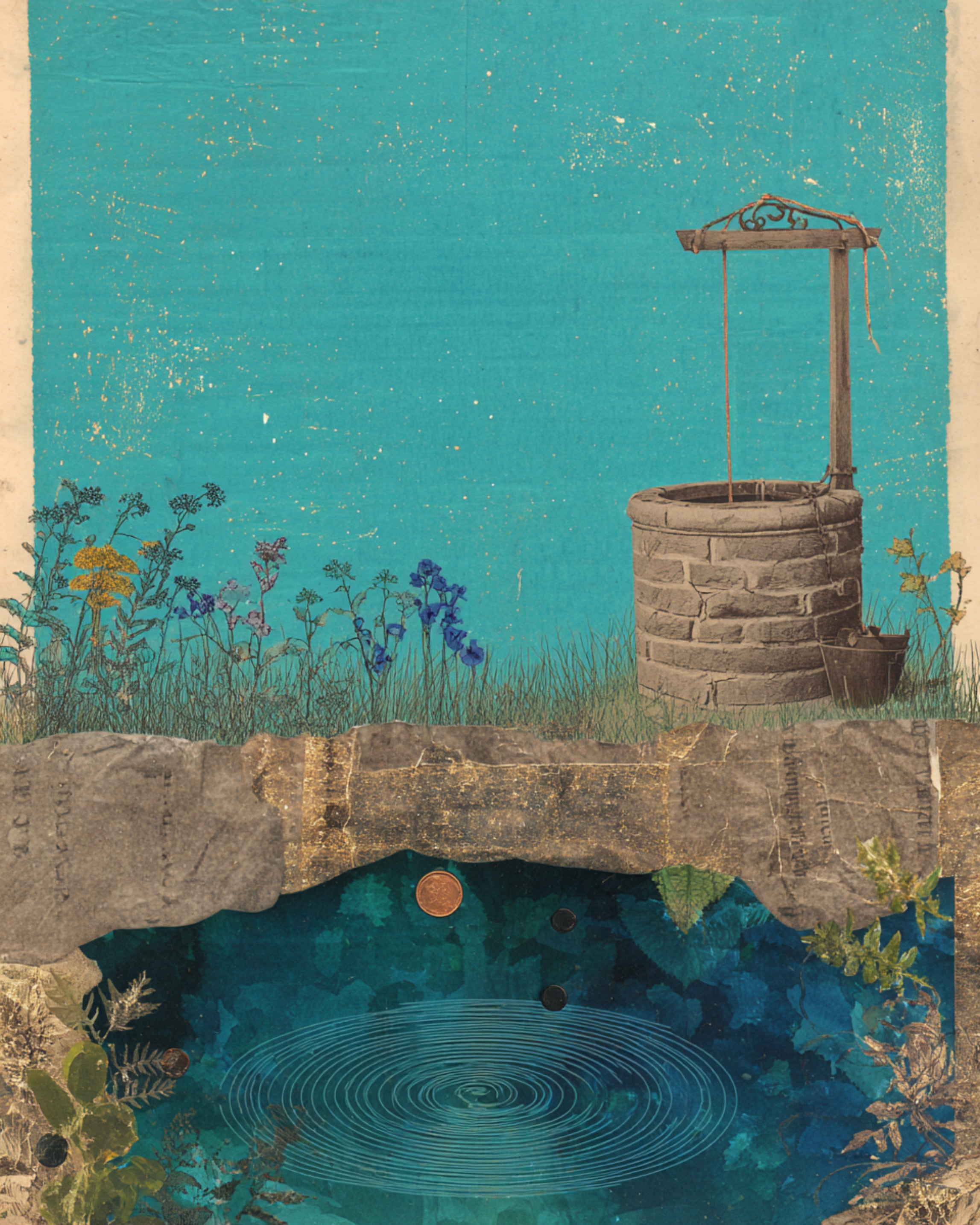
A well does not refill because someone stands at the top pouring water into it. The water rises from below. Rain enters the earth somewhere else and works its way down. The replenishing is mostly invisible until, eventually, the waterline changes.
Meanwhile, life keeps moving. There are still places to be and people we want to show up for. The reserves are being used even as we try to replenish them. The goal is not to arrange a life where nothing ever asks anything of us. I’m not sure that life would be especially good anyway.
We use our reserves because we are alive. We spend attention on work. We give patience to people we care about. Bodies need energy simply to carry us through.
The question is what keeps entering the ground underneath all of that. What leaves something behind instead of only taking.
For me, I keep finding my way back to movement and connection, even when I’m resistant to both. They do not always look like rest, which is probably why I forget that they can be restorative.
The practice
Find somewhere comfortable to be still for a few minutes.
Close your eyes, or soften your gaze.
Imagine a stone well.
Notice the rim. The rope resting against it.
Look down and imagine the water below.
There is no need to decide whether the well is full or low. Just notice where the water sits.
Now imagine setting the bucket down.
For a little while, nothing is being drawn.
Then rain begins.
Not falling into the open well, but onto the earth around it.
Watch the ground take it in.
By morning there may be no sign of the rain at all.
But underneath, the water has begun to rise.
Imagine it moving slowly upward along the stone.
Stay with that image for a few breaths.
Then ask yourself:
What has actually been replenishing me lately?
Not what is supposed to.
What has been leaving you with a little more than you had before?
Stay there for another moment before opening your eyes.
The Soundtrack
The Poem
wishing well
She comes to the well
with her pockets full.
A coin for every name
she has carried that day.
She lets them fall
one after another,
wishing them well.
Then she lowers the bucket
for the jugs they have left her,
the pails waiting
along the wall.
Morning after morning,
the rope passes through her hands.
The bucket comes up.
The bucket goes down again.
Then one day
the stone that used to sweat
is dry beneath her palms.
Below it,
the dark stops
and pale rock begins,
a band of it
wider each time she looks.
The grass around the stones
loses its green.
Dust settles
where there had been mud.
Still, she comes.
Still, the rope
travels farther.
One evening
she drops in a coin
and waits
for the small sound of water.
Nothing.
She bends closer. Listening.
At last,
far below,
a plink.
For a long while
she stays there,
looking down.
The coins are still there,
small glints beneath the water,
one for this person,
one for that.
The next morning
she stands at the rim
with the rope in one hand
and a coin in the other.
The bucket would still find water.
She leaves it
against the stone.
That night, rain.
By morning
the ground has swallowed every trace.
But below,
the water has climbed
another inch of stone.
The pale band narrows.
Another rain.
Then another.
Each time,
the earth takes it in.
Each time,
the dark rises.
When she comes again,
there is one coin
in her pocket.
She turns it once
beneath her thumb.
This time,
the name is hers.
She closes her hand around it.
I wish to be well.
Then lets it go.
The coin catches the light,
falls,
and before she has time
to lean closer,
the water answers.
THE THROUGHLINE
I’m starting to notice the difference between something that costs energy and something that drains it. I have been treating those as basically the same for a long time. They very much aren’t.
Nourishing your body with deliberate movement costs energy. Making plans with someone costs energy.
Oftentimes I come home with more capacity than I left with.
Meanwhile, I can spend an entire evening technically resting on the couch watching The Real Housewives and somehow feel more depleted by bedtime. This is not an argument against the couch. I remain deeply committed to the couch, and to the unobstructed view it gives me of women arguing over dinner.
It is more that I’m trying to stop using How little can I do? as my only measure of whether I am taking care of myself.
A better question for me seems to be: What am I like after?
After an hour alone. After I move my body. After I see someone. After I say yes to something I could have talked myself out of.
There are things I enjoy that still leave me wrung out. There are things I resist that consistently make me feel more available to my own life.
I’m trying to pay more attention to that evidence.
Not so I can optimize myself into a person with endless capacity. That sounds exhausting.
Mostly because I’d like to stop waiting until the well is nearly empty before I think about what keeps it full.
SOMETHING TO CARRY INTO YOUR WEEK
What gives something back to you?
Not what looks restorative from the outside. Think about how you actually feel afterward.
Smile & sigh. Yay.
Let’s make a good day of it,
Bevin
previous editions