another way in
Edition no. 15 · november 15, 2026
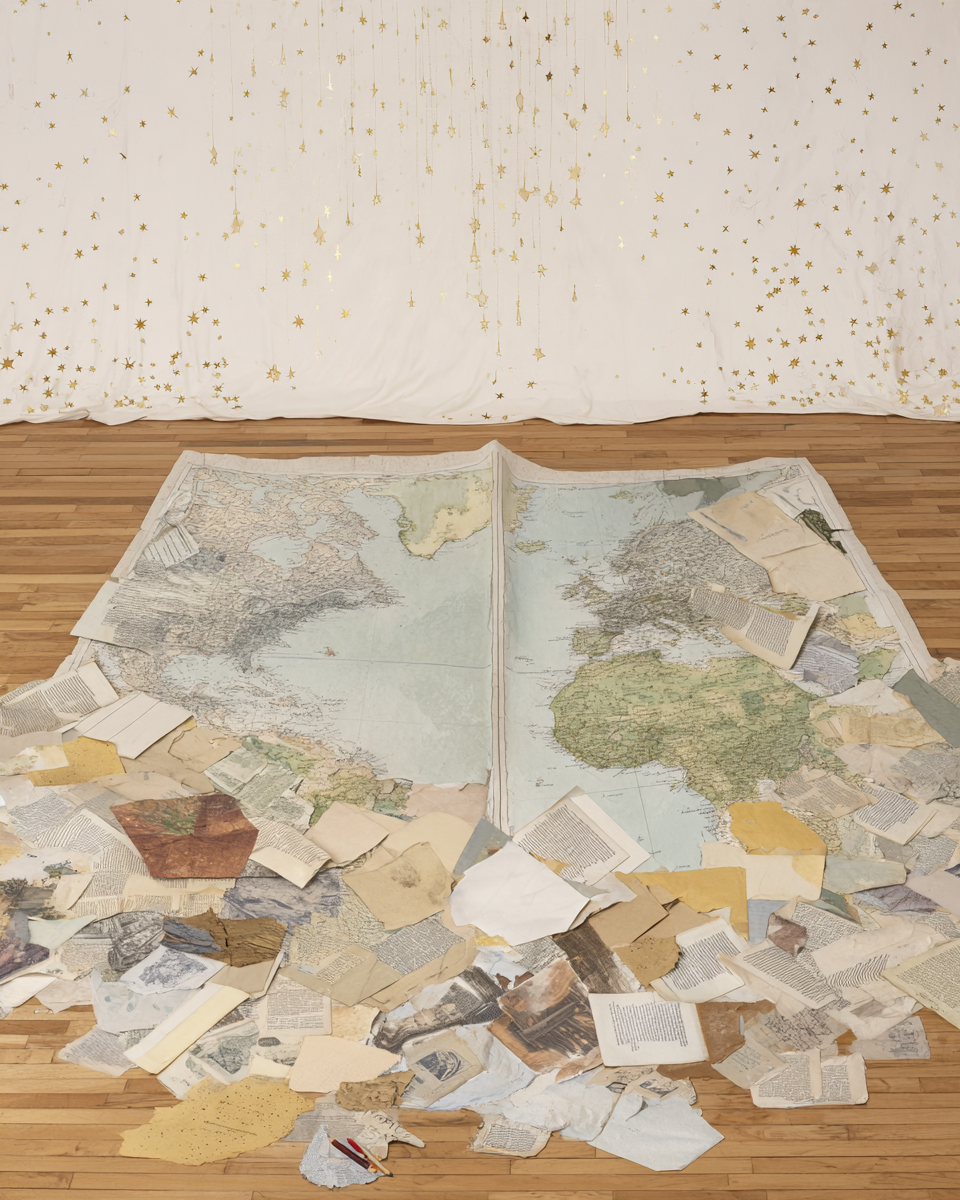
I've been trying to find another way into some of the most ordinary parts of my life lately.
Not the big, life-altering things. The things that should be relatively simple but somehow become complicated when I get involved. I've noticed how easily I convince myself there's a particular way something needs to happen. And when that way isn't working, my first instinct is usually to try a little harder. Which, as it turns out, isn't always a particularly brilliant strategy.
This week, I've been asking myself a different question: What if I approached this another way?
I've been picturing the little pools of water tucked into the rocks along the shoreline. The waves break some distance away, but a thin ribbon of water finds its way through the narrow spaces between the stones.
It moves around what it cannot move through.
And slowly, almost imperceptibly, a hollow that seemed beyond the reach of the sea begins to fill. You might never have noticed the opening if you hadn't watched the water find its way there.
The water doesn't need to move the rock.
I've been carrying that image with me this week. I love the idea that something which appears inaccessible from one direction might be perfectly reachable from another. And that sometimes the problem isn't what we're trying to do, but the way we've decided it needs to happen.
I'm finding that another way in doesn't always require some grand revelation. Sometimes it just means being willing to try something a little differently.
The practice
This week, we're taking one of the most familiar movements in yoga and approaching it from another direction.
Come onto your hands and knees, with your wrists beneath your shoulders and knees beneath your hips.
Begin with a few familiar rounds of Cat–Cow. Inhale as you gently arch your spine, lifting your chest and tailbone. Exhale as you round your back, allowing your head and tailbone to soften toward the ground.
Now, reverse the breath.
Inhale as you round into Cat. Exhale as you gently arch into Cow.
Take a few slow rounds, keeping the movement comfortable and the breath easy.
Notice what happens when you change something as simple as the relationship between your breath and your movement.
Does one direction feel more familiar? Does the reversal ask for a different kind of attention?
Neither way needs to be better. It's simply another way in.
The Soundtrack
Just One Break
Josiah and the Bonnevilles, Mon Rovia
The Poem
Another way in
She’d learned to tell the story
of her weeks by what she’d done:
the bills she’d paid, the trains she’d caught,
the errands left to run.
When someone asked her how she was,
she’d smile and say, All right,
then mention that the kitchen clock
had stopped at ten last night.
It wasn’t that she lied to them;
the days were full, and fast.
She only knew them by their tasks
and not by how they passed.
One Sunday, hanging washing
beneath a restless sky,
she pinned a bedsheet to the line
and it began to fly.
The wind got underneath it
and swelled it, white and wide.
She reached to catch the corner
and found herself inside.
The cotton brushed her shoulders,
the clothespins clicked above,
and something in that small white room
brought back a thing she’d loved.
At eight she’d built a fortress
between two kitchen chairs,
with crayons in her pockets
and cushions stacked for stairs.
She drew a map on cardboard
of places far away.
A threadbare sheet became her sky,
with pinprick stars by day.
She lay there half the afternoon
and named each distant shore.
Her paper world lay open
across the kitchen floor.
Back in the yard, the gust moved on.
The bedsheet settled down.
She stood there holding just its corner,
the clothespins on the ground.
She hadn’t thought about that girl
in longer than she knew.
She laughed, and felt her eyes go wet,
and let the wind come through.
That evening, with the washing dry,
she folded every sheet
except for one she spread across
two chairs beside her seat.
She found an old paperback
and set it on the floor,
then crawled beneath the cotton roof
the way she had before.
THE THROUGHLINE
In class this week, we've been exploring different ways into familiar movements. A circle before a twist. A gentle rocking motion before settling into a shape. The same movements you've done a hundred times, approached from a slightly different direction.
In Conditioning, that meant exploring how slowing a movement down or changing its angle can bring an entirely different experience of strength. In Yin and Restorative, we explored the less obvious ways into feeling. How a sound, a sensation, or a passing memory can reach something that all our thinking hasn't quite managed to touch.
What I've loved about this theme is that it doesn't ask us to abandon what's familiar. There's something reassuring about realizing that you can return to the same place, the same movement, even the same question, and find something you hadn't noticed before.
I'm trying to remember that outside the studio, too. Especially when I catch myself insisting that something ought to be working simply because it's the way I've always done it.
SOMETHING TO CARRY INTO YOUR WEEK
When something small starts to feel harder than it ought to, notice whether you've begun repeating yourself. I know that feeling: trying the same thing again, only a little more impatiently.
Before you give it another go, see if there's somewhere else to begin.
You don't have to find a better way. Just one you haven't tried.
Smile & sigh. Yay.
Let’s make a good day of it,
Bevin
previous editions