good day practice no. 10
Back to body
Edition no. 10 · October 4, 2026

This week started a four-week exploration of body, breath, mind, and heart.
They are the same four places I check in with at the beginning and end of almost every class I teach. Usually we move through them together: notice the body, find the breath, see where the mind is, check in with the heart.
For the next month, I wanted to slow that process down and give each one its own week, starting with the most tangible place we have to begin.
The body.
The idea for Back to Body was to pay closer attention to sensation before deciding what that sensation means.
A twinge becomes a warning. Tightness becomes a problem. Effort gets sorted into strong or weak before we have spent much time actually feeling it.
So the question I kept bringing into class was:
What do I actually feel before I decide what it means?
Then I went to Charlotte to visit some of my best friends and tweaked my back badly enough that getting up from a chair became something I had to seriously think about. Suddenly, I was very aware of my body. There was no forgetting about it while standing up, rolling over, reaching toward the floor, or trying to find a position that didn’t hurt. Movements I normally make without thinking had to be negotiated.
It made me think about how easily the body can disappear into the background until it becomes loud enough to interrupt us. Most days, it is doing an extraordinary amount of work quietly. Adjusting our balance without much involvement from us, carrying us through airports and long days, recovering from whatever we asked of it yesterday.
Then something hurts, and the body can suddenly feel like the only thing in the room.
There is an obvious temptation at that point to make listening to the body another problem-solving exercise. Where exactly does it hurt? What caused it? What movement makes it worse? How quickly can I make it stop?
Some of those questions matter. But there were also moments this weekend when there wasn't much useful to do besides notice what made movement easier and what made me brace before I had even moved. And I kept catching myself holding my breath before I stood up.
The body and the breath are difficult to separate once you start paying attention to either one.
Breathing changed when the pain sharpened and again when I finally found a position that felt comfortable.
Sometimes the breath responds before the mind has finished deciding what is happening. Which gives us somewhere interesting to go next.
The practice
Lie down somewhere comfortable and give yourself a minute before adjusting anything. Notice where the body meets the surface beneath you.
Feel the weight of the heels, the pelvis, the ribs, the back of the head.
Choose one place that is especially noticeable right now.
It does not have to be uncomfortable. It might feel warm, heavy, restless, supported, or almost completely quiet. Stay with the sensation for a few breaths before giving it a name.
Then notice whether anything changes when you inhale.
Notice what happens when you exhale.
You are not trying to breathe into the area or make it different.
Just notice that the body and breath are already responding to one another.
The Soundtrack
live more & love more
Cat Burns
What Was I Made For?
Billie Eilish
The Poem
Body of water
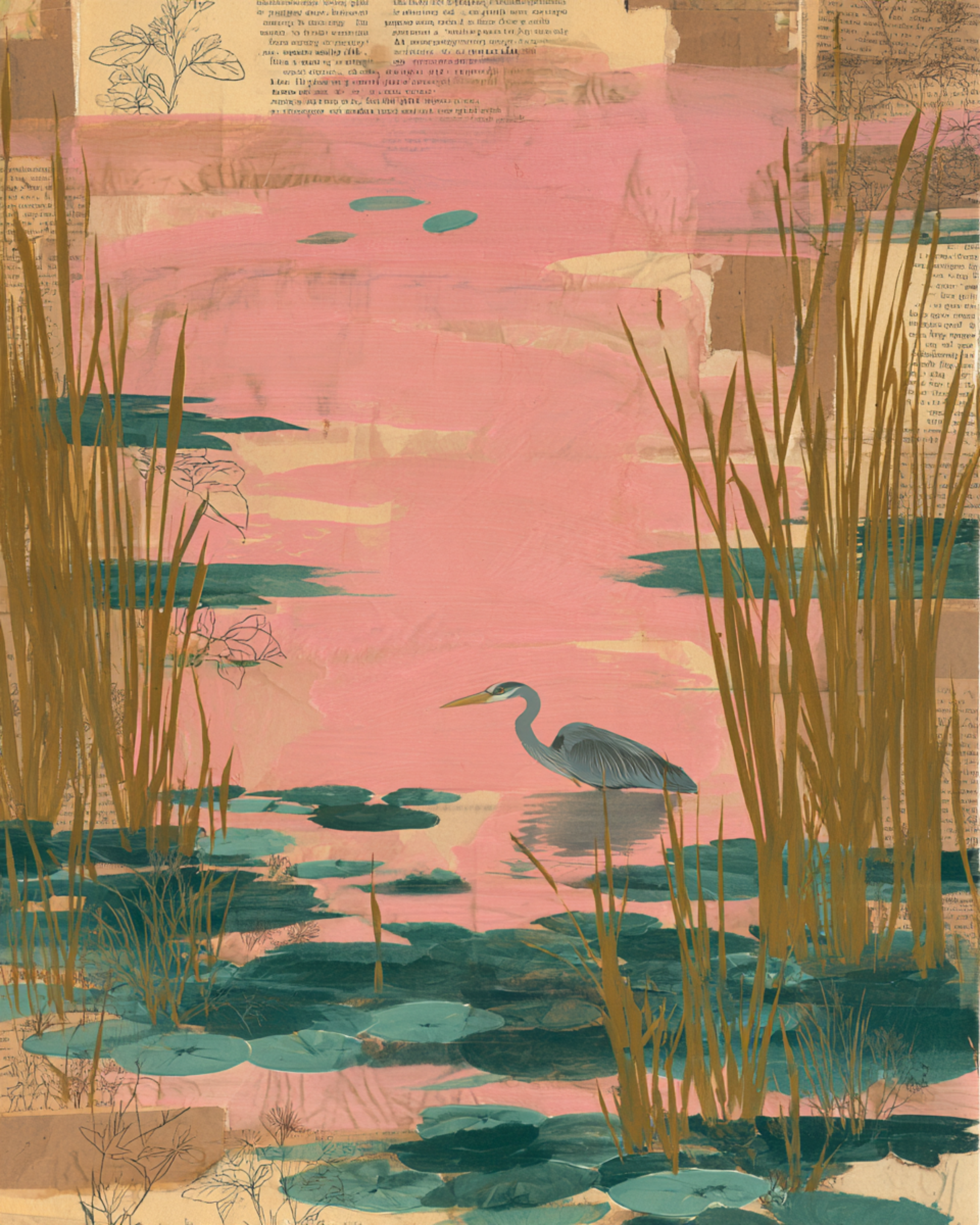
The last swim of the year is never planned.
You only learn it later, sometime in October,
remembering the afternoon you stood at the edge of the pond
with the reeds already bleached to straw
and the water so still it had taken the whole sky into itself
and gave no hint of how far down it went.
We call it a body of water, as if it too
had a weight it carried, a temperature, a depth
it kept to itself.
I know my body of work better than this body.
I could walk you through every page of it,
which parts held and which I would tear out and begin again,
as though what I made were the proof that I was here
and the one who made it only the courier,
sent ahead with the parcel and forgotten at the door.
And all summer I kept a body of evidence,
the small twinge in the knee on the stairs,
the shoulder that remembers an old limit,
the soft place at the waist my hand covers in photographs,
a case assembled so carefully
I had stopped remembering what the charge was.
I step in until the sand gives beneath my feet,
and before the word cold can get there
a bright ringing starts at the ankles,
the water rising past the knee
without a twinge, without a thought,
the skin taking in the pond the way almost no one
reads the body of a letter anymore,
every line of it, not skimming for the one
that tells us what it means.
I lie back with my ears under
and the shore goes quiet and far away,
my breath lifting the surface just above my chest,
while the pond holds all of me the way it holds the sky,
without weighing any of it.
When I climb out, the air is warmer than the water
and I stand there ringing, as if the water had tuned me,
the sand pressing into the soles of my feet,
the body simply where the water ends and the air begins.
THE THROUGHLINE
Pain is very convincing information. It does not require much concentration to notice it.
The more intriguing part of Back to Body, for me, is everything quieter than that.
This weekend I had no choice but to listen to my back. But once I was paying attention, I started noticing things beyond the pain itself: how I prepared for a movement before making it, where I shifted away from discomfort, and how often my breath changed along with the rest of me.
That feels closer to what I want this month to explore. Not waiting until something becomes loud enough to demand our attention, but becoming a little more familiar with what is happening while it is still quiet.
And somewhere in all of that noticing, the breath kept showing up.
I would brace before standing and realize I had stopped breathing. I would finally settle into a comfortable position and the exhale would come on its own. I wasn't asking the breath to do anything. It was already responding.
So that is where we go next.
Back to Breath.
SOMETHING TO CARRY INTO YOUR WEEK
Notice one sensation before you explain it.
Stay there long enough to find the breath beside it.
Smile & sigh. Yay.
Let’s make a good day of it,
Bevin
come practice with me
If you’ve been coming to my Yin, Slow Flow, or Conditioning classes, my upcoming Strength + Stillness workshop brings pieces of all three together.
It’s meant for everyone, whether strength work is already part of your practice or you’re curious about where to begin. We’ll work with intentional resistance that supports the rest of your movement practice, spend time in stillness and relaxation, and you’ll leave with simple strength work you can continue at home.
And starting October 13, I’m adding a new Tuesday 7:30 AM Align/Flow class.
This one will feel a little different from a traditional flow. We’ll move through an alignment-based yoga practice while also borrowing from Conditioning, using weights as props to add resistance and feedback to familiar shapes.
If you’ve been curious about Conditioning but weren’t sure you wanted a full strength class, this could be a really nice place to start.
previous editions